-
By:
- ophelia
- No comment
mandukya upanishad pdf
Mandukya Upanishad PDF: A Comprehensive Guide
Discover accessible Mandukya Upanishad PDFs‚ exploring ancient wisdom; download safely from trusted sources like Softonic‚ with over 105‚421 downloads this month!
The Mandukya Upanishad‚ a concise yet profoundly influential text‚ stands as a cornerstone of Advaita Vedanta philosophy. Its significance lies in its focused exploration of Om (Aum) and the four states of consciousness. Finding a reliable Mandukya Upanishad PDF is the first step towards unlocking its wisdom.
Numerous online resources offer digital versions‚ including translations and commentaries‚ such as those available through platforms like Softonic‚ ensuring accessibility for modern seekers. However‚ verifying the authenticity of these PDFs is crucial. The text’s brevity belies its depth‚ offering a systematic analysis of reality through the lens of consciousness.
This Upanishad isn’t merely a philosophical treatise; it’s a practical guide to self-realization. A quality Mandukya Upanishad PDF will often include Gaudapada’s Karika‚ a vital commentary that expands upon the core teachings. Understanding the nuances within these texts requires careful study and contemplation‚ making a well-sourced PDF invaluable.
Historical Context and Authorship
Determining the precise historical context and authorship of the Mandukya Upanishad remains a subject of scholarly debate. While its origins are ancient‚ pinpointing a specific date proves challenging. Accessing a comprehensive Mandukya Upanishad PDF often includes introductory material addressing these historical ambiguities.
Traditionally‚ the Upanishad is associated with the Atharva Veda‚ placing it within the later Vedic period. However‚ the authorship is uncertain‚ with no definitive author identified. Gaudapada‚ a prominent Advaita Vedanta philosopher‚ authored the Karika‚ a crucial commentary‚ centuries later.
Many reliable Mandukya Upanishad PDF resources will detail this historical progression‚ highlighting the evolution of thought surrounding the text. Downloading from trusted sources‚ like those offering virus-free files (as noted on Softonic)‚ ensures access to accurate historical information alongside the core teachings. The text’s enduring relevance transcends its uncertain origins‚ continuing to inspire spiritual seekers today.
The Significance of ‘Om’ (Aum)
Within the Mandukya Upanishad‚ the syllable ‘Om’ (Aum) holds paramount significance‚ representing the ultimate reality – Brahman. A quality Mandukya Upanishad PDF will dedicate substantial discussion to its multifaceted symbolism. ‘Om’ isn’t merely a sound; it embodies the entirety of existence‚ encompassing past‚ present‚ and future.
The Upanishad meticulously analyzes ‘Om’ in relation to the four states of consciousness‚ linking each component of the syllable (A‚ U‚ M) to a specific state – waking‚ dreaming‚ deep sleep‚ and Turiya. Understanding this connection is crucial for spiritual progress.
Downloading a reliable Mandukya Upanishad PDF from a safe source‚ like those verified on platforms such as Softonic‚ provides access to detailed explanations of ‘Om’s’ vibrational power and its role in meditation. The sound is considered the most sacred mantra‚ facilitating self-realization and liberation. Its resonance unlocks deeper levels of awareness.
The Four States of Consciousness (Chaturtha)
The Mandukya Upanishad profoundly explores the four states of consciousness: waking (Vishwa)‚ dreaming (Taijasa)‚ deep sleep (Prajna)‚ and the transcendental state (Turiya). A comprehensive Mandukya Upanishad PDF will meticulously detail each state‚ offering pathways to understanding their nature.
These states aren’t simply psychological phenomena; they represent varying degrees of identification with the self. The Upanishad asserts that true liberation lies in realizing Turiya‚ the state beyond all other states‚ a realm of pure consciousness.
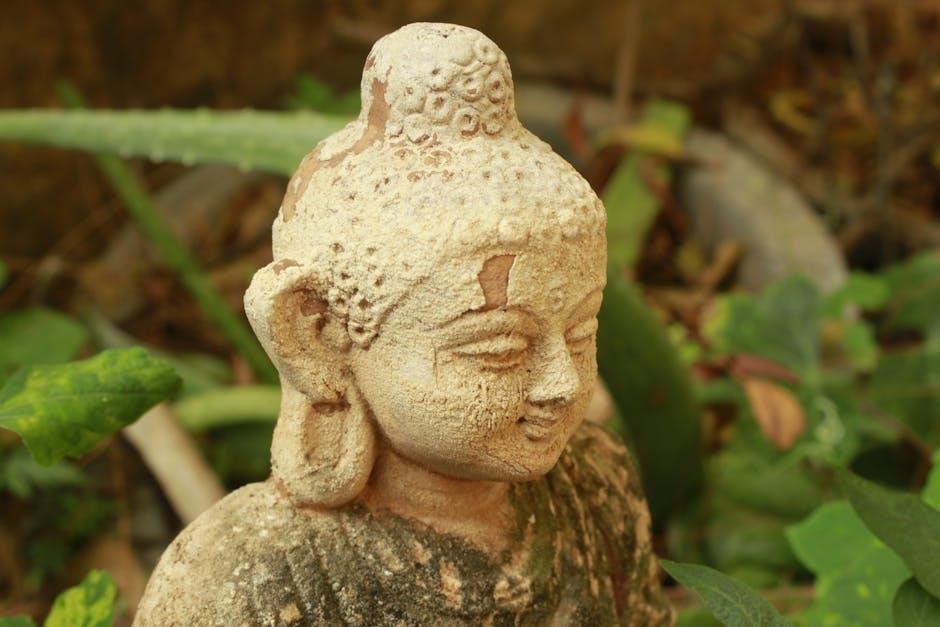
Accessing a trustworthy Mandukya Upanishad PDF download – ensuring it’s virus-free‚ as verified by sources like Softonic – allows for in-depth study of how meditation and self-inquiry can facilitate the experience of Turiya. The text emphasizes that recognizing the illusory nature of the other three states is key to achieving lasting peace and enlightenment.
Vishwa – The Wakeful State
Vishwa‚ the wakeful state‚ is the first of the four states of consciousness detailed within the Mandukya Upanishad. A reliable Mandukya Upanishad PDF will explain how‚ in this state‚ we are outwardly focused‚ perceiving the external world through our senses. It’s characterized by a sense of duality – subject and object.

This state‚ while seemingly real‚ is presented as ultimately illusory. The Upanishad suggests that our identification with the body and external experiences creates a limited perception of reality. Studying a well-translated PDF helps unpack this complex concept.
Understanding Vishwa is crucial as a starting point for spiritual inquiry. By recognizing the limitations of the wakeful state‚ as outlined in safe-to-download resources like those found on Softonic‚ one can begin the journey towards deeper states of consciousness and ultimately‚ liberation. It’s a foundational step towards realizing the true Self.
Taijasa – The Dream State
Taijasa‚ the dream state‚ represents the second level of consciousness explored in the Mandukya Upanishad. A comprehensive Mandukya Upanishad PDF will detail how‚ unlike the wakeful state‚ the dream state is characterized by inward focus. Though experiences feel real‚ they are creations of the mind‚ lacking the external validation of the waking world.
This state highlights the power of consciousness to generate reality independently of sensory input. The dreamer identifies with the experiences within the dream‚ demonstrating a shift in locus of control. Accessing a secure PDF download clarifies this subtle distinction.
Understanding Taijasa is vital for recognizing the illusory nature of reality. It demonstrates that our perceived world is‚ in essence‚ a projection of consciousness. Resources like those available online‚ when verified for safety‚ offer deeper insights into this transformative concept‚ paving the way for self-realization.
Prajna – The Deep Sleep State
Prajna‚ the deep sleep state‚ as detailed in a reliable Mandukya Upanishad PDF‚ signifies a state of profound unconsciousness. Here‚ the individual is devoid of dreams and external awareness‚ experiencing a blissful‚ yet undifferentiated‚ state of being. It’s a temporary cessation of the ego and the dualistic perception of the world.

However‚ consciousness doesn’t entirely disappear; it remains as a potentiality‚ a latent awareness. This is crucial – it’s not annihilation‚ but a withdrawal from the active play of consciousness. A well-sourced PDF will emphasize this distinction.
Exploring Prajna through study‚ aided by secure downloads‚ reveals the limitations of identifying solely with waking or dreaming consciousness. It points towards a deeper‚ underlying reality beyond these fluctuating states. Understanding this state is a step towards recognizing the true Self‚ free from the constraints of individual experience.
Turiya – The Transcendental State
Turiya‚ the transcendental state‚ as illuminated within a comprehensive Mandukya Upanishad PDF‚ represents the ultimate reality beyond the three previously described states – waking‚ dreaming‚ and deep sleep. It’s not merely an altered state within consciousness‚ but a transcendence of consciousness itself.
This state is characterized by non-duality‚ freedom from all limitations‚ and complete unity with the Absolute. A quality PDF resource will explain that Turiya is not an experience to be attained‚ but rather the realization of what already is – our true nature. It’s the underlying ground of all being.
Accessing insights into Turiya through careful study of a verified PDF version of the Upanishad‚ coupled with meditative practices‚ allows one to glimpse this reality. It’s the goal of spiritual inquiry‚ the liberation from the cycle of suffering‚ and the realization of infinite bliss.
Detailed Analysis of the Karika (Gaudapada’s Commentary)
Gaudapada’s Karika‚ often found alongside the Mandukya Upanishad in a single PDF‚ provides a profound and intricate commentary on the Upanishad’s core teachings. A thorough PDF resource will detail how Gaudapada systematically dismantles the illusion of reality through logical reasoning and insightful analysis.

He employs the method of drsti-srishti – the apparent creation – to demonstrate that the world is not objectively real‚ but rather a projection of consciousness. Studying a well-translated PDF reveals Gaudapada’s masterful use of analogy and dialectic to challenge conventional perceptions.
The Karika isn’t simply an explanation; it’s a deconstruction of the very foundations of our understanding. Accessing a reliable PDF allows for a deeper comprehension of Advaita Vedanta principles as articulated by Gaudapada‚ paving the way for self-realization.
Gaudapada’s Advaita Vedanta Perspective
Gaudapada‚ through his Karika commentary (often available in Mandukya Upanishad PDF formats)‚ is a pivotal figure in the development of Advaita Vedanta. His perspective‚ meticulously detailed in accessible PDF studies‚ emphasizes the non-duality of reality – the ultimate oneness of Atman (the individual self) and Brahman (the ultimate reality).
Unlike some earlier Vedanta schools‚ Gaudapada’s approach‚ as revealed in comprehensive PDF analyses‚ leans heavily towards idealism‚ asserting that empirical reality is fundamentally illusory. He posits that differentiation arises from ignorance (avidya)‚ and liberation comes from realizing the underlying unity.
A quality Mandukya Upanishad PDF featuring the Karika will showcase Gaudapada’s unique method of philosophical inquiry‚ laying the groundwork for Shankara’s later systematization of Advaita Vedanta. His work is crucial for understanding the path to liberation.
The Doctrine of Ajata (Non-Origination)
Central to Gaudapada’s interpretation of the Mandukya Upanishad – readily explored in detailed Mandukya Upanishad PDF resources – is the doctrine of Ajata‚ meaning “non-origination.” This radical concept challenges conventional understanding of cause and effect‚ asserting that nothing truly comes into being or ceases to exist.
Instead‚ all phenomena are seen as illusory appearances‚ modifications of the ultimate reality (Brahman)‚ akin to a mirage. Studying PDF versions of the Karika reveals Gaudapada’s arguments against the validity of causal relations‚ emphasizing the inherent emptiness of all constructs.
Understanding Ajata‚ through careful examination of PDF commentaries‚ is key to grasping the liberating realization of non-duality. It dismantles the notion of a separate self and a changing world‚ paving the way for profound spiritual insight and freedom from suffering.
Mandukya Upanishad and Yoga
The Mandukya Upanishad‚ accessible through numerous Mandukya Upanishad PDF downloads‚ holds a significant connection to the practice of Yoga‚ particularly as outlined in Patanjali’s Yoga Sutras. The Upanishad’s exploration of the four states of consciousness – waking‚ dreaming‚ deep sleep‚ and Turiya – provides a framework for understanding the yogic journey towards self-realization.
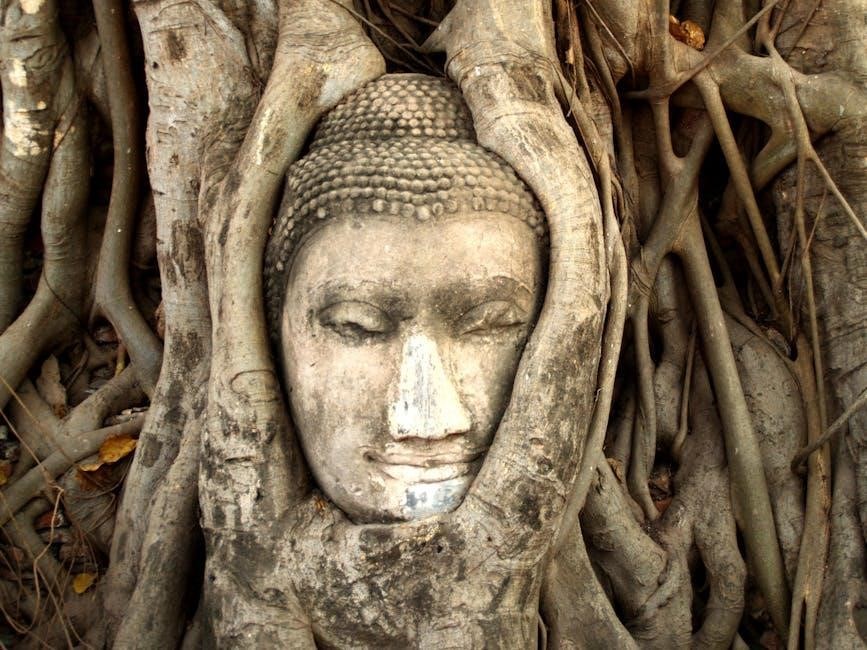
PDF study guides often highlight how the states mirror stages in meditative practice. The goal of Yoga‚ like realizing Turiya‚ is transcendence of the limited self and union with the ultimate reality.
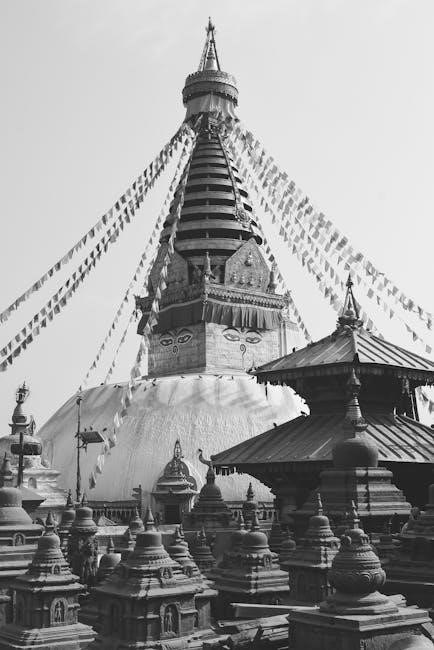
Detailed PDF analyses demonstrate how techniques like pranayama and dhyana (meditation) facilitate moving beyond the fluctuating states of mind‚ ultimately leading to the experience of pure consciousness. The Upanishad offers a philosophical foundation for the practical methods of Yoga.
Relationship to Patanjali’s Yoga Sutras

Exploring Mandukya Upanishad PDF resources reveals a profound relationship with Patanjali’s Yoga Sutras. Both systems aim for kaivalya – liberation – but approach it through different lenses. The Upanishad‚ readily available in PDF format‚ provides the philosophical underpinning‚ while the Sutras offer a practical methodology.
Many PDF commentaries illustrate how the four states of consciousness detailed in the Mandukya Upanishad directly correlate with the kleshas (afflictions) addressed in the Yoga Sutras. The waking state embodies attachment‚ the dream state – aversion‚ and deep sleep – ignorance.
Through consistent practice‚ as detailed in PDF guides‚ Yoga aims to quiet these fluctuations‚ mirroring the Upanishad’s pursuit of Turiya‚ the transcendental state. The Sutras provide the ‘how‚’ while the Upanishad clarifies the ‘why’ of this transformative journey.
The Role of Meditation in Realizing Turiya
Numerous Mandukya Upanishad PDF resources emphasize meditation as the cornerstone for realizing Turiya‚ the transcendental state. The Upanishad doesn’t merely describe Turiya; it provides a roadmap‚ best understood through dedicated practice‚ often detailed in accessible PDF study guides.
Meditation‚ as outlined in these PDFs‚ isn’t simply relaxation‚ but a focused inquiry into the nature of consciousness. By systematically observing the waking‚ dreaming‚ and deep sleep states – as described within the Mandukya Upanishad PDF – the meditator begins to dis-identify with them.
This dis-identification‚ a core concept explained in many PDF commentaries‚ creates space for the experience of Turiya. Consistent practice‚ guided by the Upanishad’s wisdom and available in convenient PDF format‚ allows one to transcend the limitations of the mind and experience pure‚ unconditioned awareness.
Finding Reliable Mandukya Upanishad PDF Resources
Locating trustworthy Mandukya Upanishad PDF resources requires discernment. While numerous sites offer downloads‚ verifying authenticity is crucial. Platforms like Softonic‚ though offering software downloads including WhatsApp‚ aren’t primary sources for ancient texts; caution is advised.
Seek PDFs from reputable academic institutions‚ established spiritual organizations‚ or well-known translators. Prioritize sources that clearly state their lineage and translation methodology. Beware of sites with excessive advertising or unclear copyright information when searching for a Mandukya Upanishad PDF.
Always cross-reference information from multiple PDFs to ensure consistency and accuracy. Checking for editorial oversight and scholarly annotations can further validate a resource. Remember‚ a freely available PDF doesn’t automatically equate to reliability; careful evaluation is key.
Popular PDF Translations and Editions
Several Mandukya Upanishad PDF translations are widely circulated. While a definitive “best” edition is subjective‚ some consistently appear in scholarly and spiritual circles. Often‚ editions include Gaudapada’s Karika‚ a crucial commentary‚ alongside the original text.
Translations by Swami Gambhirananda and Swami Sarvananda are frequently recommended for their depth and accuracy. Searching for these names alongside “Mandukya Upanishad PDF” yields readily available options. Keep in mind that different translators employ varying interpretative frameworks.
Digital versions often include Sanskrit text with transliteration‚ making it accessible to those unfamiliar with the Devanagari script. Resources mirroring the format of established publishers‚ though potentially requiring purchase‚ generally offer higher quality PDFs. Be mindful of copyright restrictions when downloading and sharing.
Authenticity and Verification of Online PDFs
When seeking a Mandukya Upanishad PDF online‚ verifying authenticity is paramount. The internet hosts numerous files‚ but quality and accuracy vary significantly. Prioritize downloads from reputable sources – established publishers or known spiritual organizations are preferable.
Exercise caution with files from unknown websites; these may contain errors‚ incomplete translations‚ or even malware; Cross-reference the text with established translations by recognized scholars like Swami Gambhirananda or Sarvananda to identify discrepancies. Look for consistent formatting and proper Sanskrit transliteration.
Be wary of PDFs claiming exclusive or “lost” versions. Genuine texts are widely available. Always scan downloaded files with updated antivirus software. A safe approach involves comparing multiple PDFs to ensure consistency and reliability before deep study.
Practical Applications of the Mandukya Upanishad
Studying a Mandukya Upanishad PDF isn’t merely academic; it offers profound practical benefits for modern life. The core teaching – understanding the four states of consciousness – provides a framework for self-awareness and emotional regulation. Recognizing the waking‚ dreaming‚ deep sleep‚ and transcendental states allows for mindful observation of one’s internal experience.
This awareness fosters detachment from fleeting thoughts and emotions‚ reducing reactivity and promoting inner peace. The Upanishad’s emphasis on ‘Om’ as the sound of ultimate reality supports focused meditation practices‚ deepening concentration and cultivating stillness.
Integrating these principles involves consistent self-inquiry‚ questioning the nature of the self and reality. Ultimately‚ the Mandukya Upanishad guides towards liberation through direct experience‚ transforming daily life into a path of spiritual growth.
Self-Inquiry and the Path to Liberation
A readily available Mandukya Upanishad PDF serves as a powerful tool for initiating self-inquiry‚ the direct path to liberation (moksha). The text encourages relentless questioning: “Who am I?” and “What is the nature of reality?” This isn’t intellectual debate‚ but a deep‚ experiential investigation into the self’s true nature.
By systematically dismantling the identification with the waking‚ dreaming‚ and deep sleep states‚ as detailed within the PDF‚ one begins to glimpse the underlying reality – Turiya‚ the transcendental state. This process‚ supported by consistent study and meditation‚ dissolves the illusion of a separate self.
Liberation‚ according to the Mandukya Upanishad‚ isn’t an external achievement‚ but the realization of one’s inherent freedom. Accessing a quality PDF facilitates this journey‚ offering guidance and inspiration for profound self-discovery.

Integrating the Teachings into Daily Life
A downloaded Mandukya Upanishad PDF isn’t meant for mere academic study; its wisdom is designed for practical application. Begin by observing your states of consciousness throughout the day – waking‚ dreaming‚ and deep sleep – recognizing their impermanent nature. This mindful awareness‚ cultivated through consistent PDF review‚ fosters detachment.
Utilize the ‘Om’ (Aum) mantra‚ central to the Upanishad‚ during daily activities or meditation. This sound vibration‚ explored in detail within the PDF‚ helps quiet the mind and connect with the underlying reality.
Practice self-inquiry – questioning the ‘I’ thought – during moments of stress or emotional turbulence. The Mandukya Upanishad‚ accessible via PDF‚ provides a framework for navigating life’s challenges with equanimity and realizing the Turiya state even amidst daily routines.